Lighting
What Is CRI in LED Lighting? CRI 80 vs CRI 90 Explained
CRI is a familiar lighting specification, but the number is only one part of colour quality. Here is how to read it without the marketing noise.

Key takeaways
- CRI is a measure of how colours under a test light compare with colours under a reference illuminant at a similar colour temperature.
- A higher CRI generally indicates better colour fidelity, but CRI does not describe every aspect of colour quality.
- CRI 90+ is useful when accurate-looking skin tones, food, fabrics, artwork and interior finishes matter.
- Compare CRI together with colour temperature, brightness, flicker performance and the quality of the complete luminaire or lamp.
CRI is a colour-fidelity metric, not a brightness score
Colour Rendering Index, usually written as CRI or Ra, is used to describe how faithfully a light source reveals the colours of objects compared with a reference light source. The CIE defines CRI in terms of the degree to which the colour of an object under a test illuminant conforms to its colour under a reference illuminant, after allowing for chromatic adaptation.
CRI does not tell you how bright a lamp is. Brightness is normally discussed using lumens or illuminance. It also does not tell you whether the light looks warm or cool; that is described by correlated colour temperature, usually written in kelvin (K).
CRI 80 vs CRI 90: what changes in practice?
CRI 80 lighting is common in general-purpose LED products and can be perfectly acceptable for many spaces. Moving to CRI 90+ typically improves colour fidelity, especially where subtle differences in reds, skin tones, wood, fabric, food and artwork are important.
The difference is easiest to notice when you compare the same objects under two light sources with similar brightness and colour temperature. A high-CRI source should make colours look more like they do under the chosen reference, rather than simply making them look more saturated.
| Specification | CRI around 80 | CRI 90+ |
|---|---|---|
| General home lighting | Often adequate | Higher colour fidelity |
| Skin tones | Can look acceptable | Usually more natural-looking |
| Food, fabrics and artwork | Less demanding use | Better suited when colour matters |
| Brightness | Not determined by CRI | Not determined by CRI |
| Colour temperature | Separate specification | Separate specification |
Why CRI is useful — and why it is not the whole story
CRI remains widely used in lighting specifications, but colour science has moved forward. The CIE has documented limitations of the traditional general CRI, particularly for solid-state lighting, and in 2025 recommended that the lighting community begin adopting the newer CIE General Colour Fidelity Index, Rf, while reporting both metrics during the transition.
That does not make CRI useless. It means a single number should not be treated as a complete description of colour quality. Spectral distribution, colour fidelity across different hues, colour preference, colour temperature and the visual environment all influence the final experience.
A useful buying rule
Treat CRI as one quality signal. For a premium home-lighting product, also check brightness, CCT range, dimming behaviour, flicker performance, thermal design, warranty and support.
How Pearlexa uses CRI in Orbit
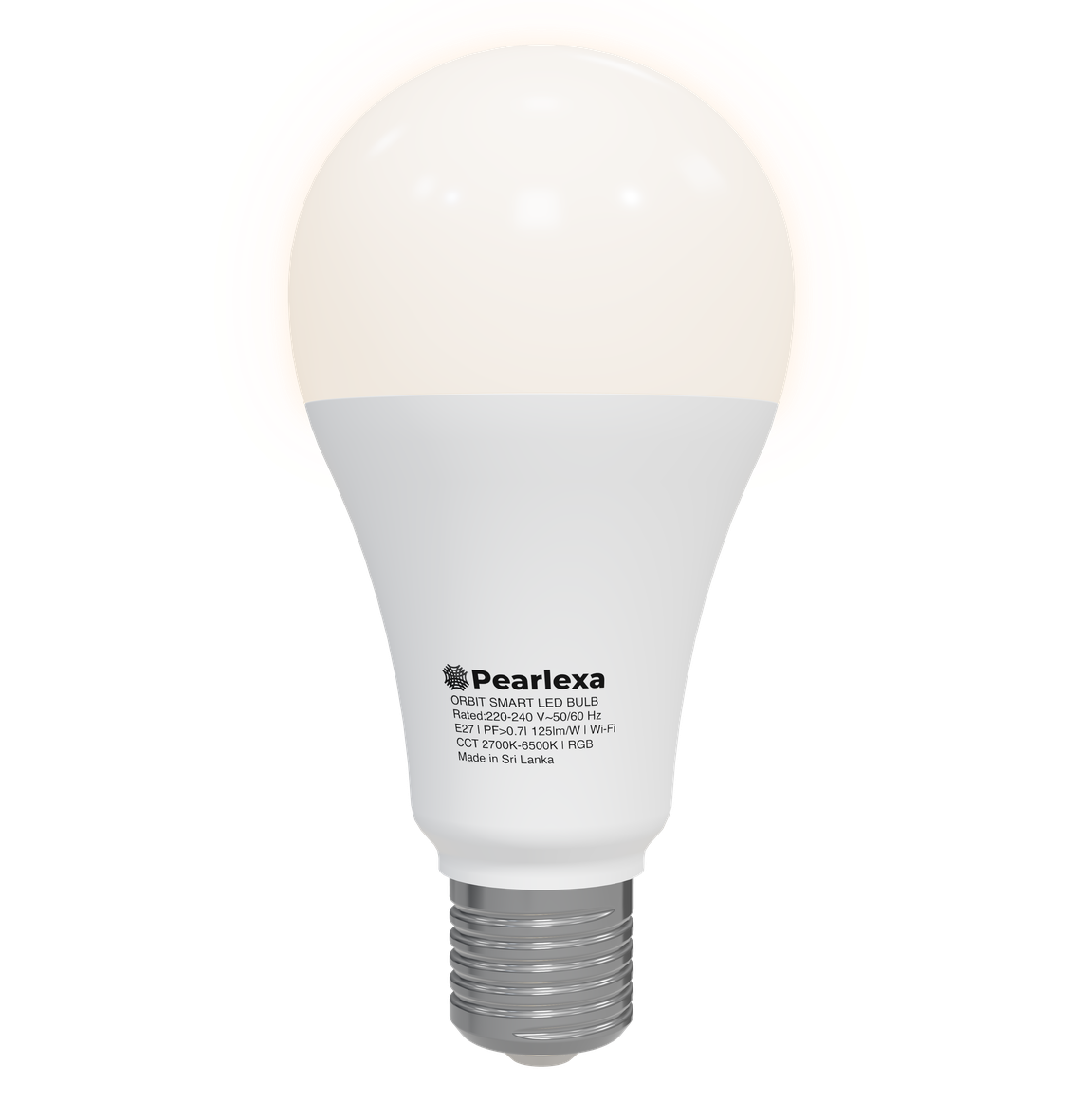
Pearlexa Orbit Standard and Orbit Pro are specified for CRI above 90 across their white-light operation. That specification is intended to support natural-looking everyday lighting while the lamp also provides tunable white and RGB colour control.
We deliberately keep the product claim narrow: CRI describes colour fidelity. It is not a medical or wellness claim, and it does not by itself prove every aspect of colour quality. As Pearlexa expands its optical testing, we intend to publish additional measured lighting data where it is useful to customers.
Explore Orbit Standard specificationsSources and further reading
Pearlexa uses primary technical and regulatory sources where practical. External sources remain the property of their respective publishers.
Editorial & intellectual-property note
This article explains public product characteristics and general engineering principles. Pearlexa does not publish confidential schematics, source code, security keys, proprietary protocols, manufacturing tolerances or unpublished design files. Text and original Pearlexa imagery are © Pearlexa Pvt Ltd unless otherwise stated.
Read our editorial policy