Lighting
2700K vs 4000K vs 6500K: Which Light Colour Should You Choose?
Kelvin describes the appearance of white light — not its brightness or quality. Here is a practical way to choose a colour temperature for each room.

Key takeaways
- Lower Kelvin values look warmer; higher values look cooler or more daylight-like.
- CCT is an appearance specification, not a quality ranking — 6500K is not inherently 'better' than 2700K.
- 2700K is commonly used for relaxed residential spaces, while 4000K is a versatile neutral choice and higher CCTs can suit task-oriented spaces.
- Tunable-white lighting avoids locking a room into one colour temperature.
What does Kelvin mean in lighting?
Correlated colour temperature (CCT) describes the colour appearance of white light and is expressed in kelvin (K). Lower values appear warmer, with more yellow or amber character. Higher values appear cooler, with a whiter or more bluish appearance.
The U.S. Department of Energy describes roughly 2700K as warm, 3000K as warm/pleasing, and higher CCTs as progressively cooler. Importantly, CCT does not tell you whether a lamp is brighter, more efficient or higher quality. It describes appearance.
A practical room-by-room comparison
| CCT | Appearance | Often useful for |
|---|---|---|
| 2700K | Warm, relaxed | Bedrooms, living rooms, dining areas, evening ambience |
| 3000K | Warm but slightly cleaner | General residential lighting, hospitality |
| 4000K–4500K | Neutral to clear white | Kitchens, home offices, mixed-use spaces, task lighting |
| 5000K | Cool white | Detailed tasks where a cooler appearance is preferred |
| 6500K | Very cool / daylight-like | Specific task or preference-driven use; not automatically the best choice for every room |
Why tunable white is more useful than choosing one fixed CCT
A fixed-CCT bulb forces you to choose one appearance at installation. Tunable-white lighting lets the same fixture move between warmer and cooler white light through software or controls.
That flexibility is useful in rooms that serve more than one purpose. A living room might use warmer light at night and a clearer neutral white when cleaning, working or preparing for an event. The right setting is partly technical and partly personal preference.

Colour temperature and colour rendering are different
Two bulbs can both be labelled 4000K and still render object colours differently. That is where colour rendering metrics such as CRI become relevant. CCT tells you the colour appearance of the light source; CRI tells you about colour fidelity under that source.
For a premium result, consider both. A wide CCT range is useful, but it should not come at the expense of colour quality, brightness stability or smooth dimming.
Read: What is CRI?Orbit tunable white
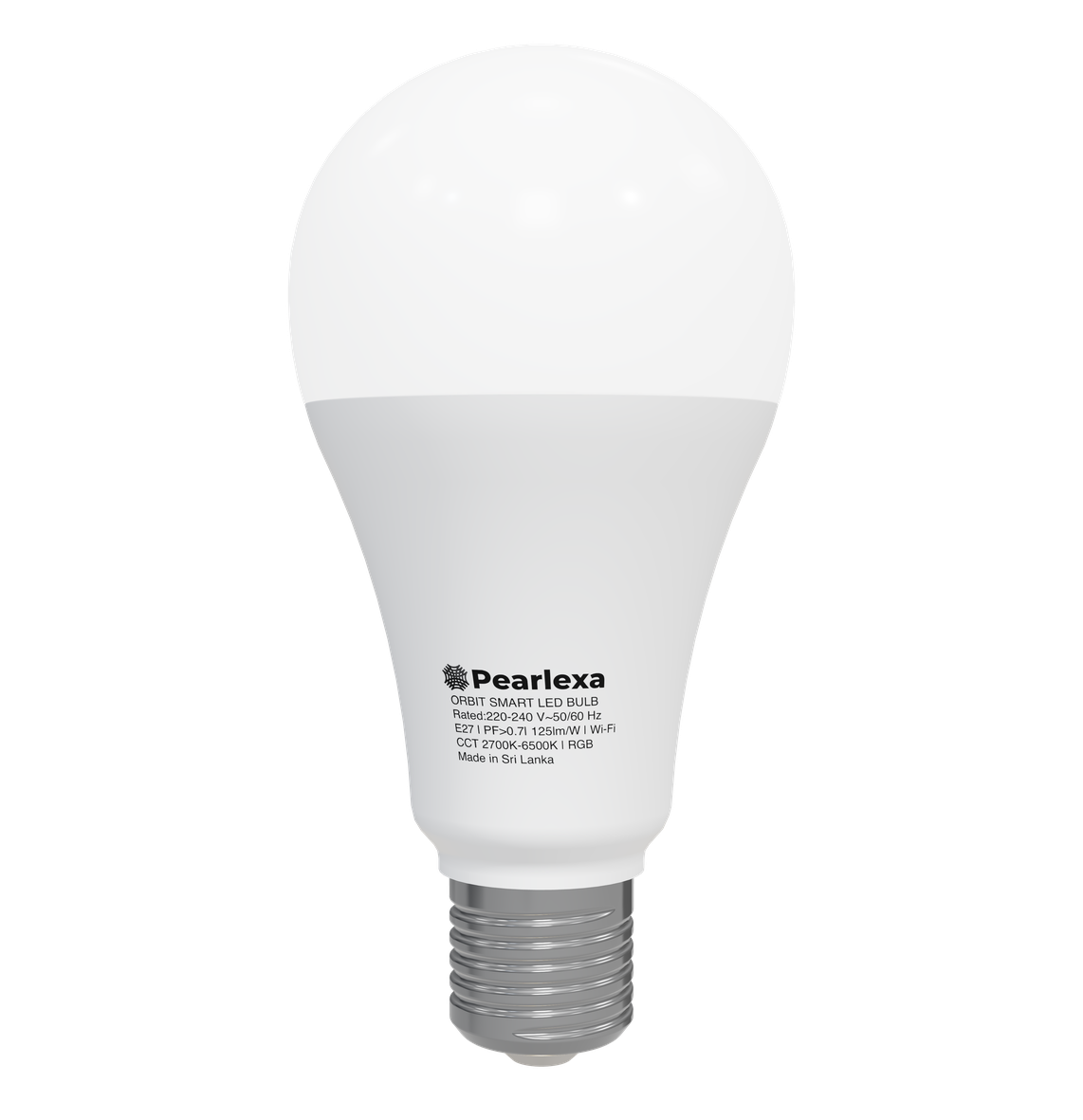
Orbit Standard and Orbit Pro are designed for a 2700K–6500K tunable-white range, giving one lamp the ability to cover warm residential lighting through cooler task-oriented white. RGB colour is an additional mode and is separate from the white-light channels.
Explore Orbit smart lightingSources and further reading
Pearlexa uses primary technical and regulatory sources where practical. External sources remain the property of their respective publishers.
Editorial & intellectual-property note
This article explains public product characteristics and general engineering principles. Pearlexa does not publish confidential schematics, source code, security keys, proprietary protocols, manufacturing tolerances or unpublished design files. Text and original Pearlexa imagery are © Pearlexa Pvt Ltd unless otherwise stated.
Read our editorial policy